Education
What is CranioSacral Therapy?
CranioSacral Therapy (CST) is a gentle, hands-on therapy grounded in osteopathic principles. Using a very light touch, CST works with the body rather than using force or manipulation to create change.
CST recognizes the body as an interconnected whole and works with its natural capacity for self-regulation and healing. Rather than pushing the body toward a predetermined result, CST follows what the body presents and gently supports the release of tension and restriction. As restrictions ease, the body can move toward greater balance and homeostasis, creating more supportive conditions for its own natural healing processes.
How it works
How does CST work?
The CranioSacral System includes the membranes and fluid surrounding the brain and spinal cord, and extends from the head down through the spine to the sacrum at the base of the pelvis.
The membranes of the CranioSacral System connect with the network of connective tissue that extends throughout the entire body. Because these tissues are interconnected, restriction in one area of the body can influence movement and tension elsewhere. Restrictions may develop or be influenced by injury or physical trauma, illness, surgery or scarring, inflammation, repetitive strain, posture, prolonged tension, sustained stress, the body’s responses to emotional or psychological trauma, or emotional and energetic patterns. When these restrictions affect the CranioSacral System, they can interfere with its natural mobility and the way its tissues are able to move and respond.
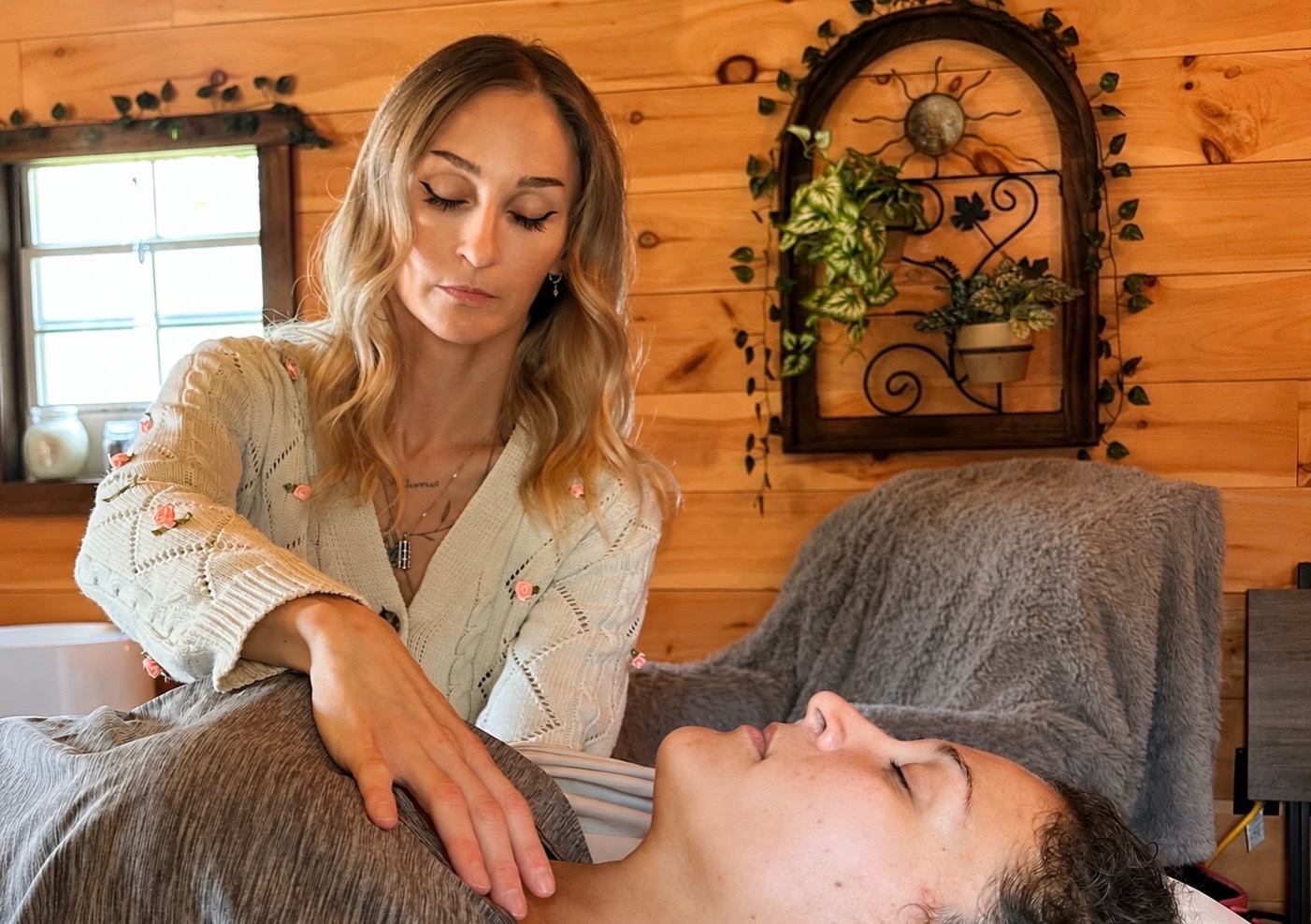
Using very light touch, I assess the CranioSacral System and work with areas of tension and restriction as they present. Rather than using force to create change, the gentle nature of the work allows the tissues to respond and release at their own pace.
At times, this gentle work may also be accompanied by a process known as unwinding, where the body responds with subtle, spontaneous movements or shifts. Within CranioSacral Therapy, unwinding is viewed as an opportunity for the body to explore patterns of tension and movement, without force or conscious effort. As the person receiving the work begins to feel safe and at ease, these responses can be gently supported and followed, creating space for emotions and experiences that may have been held onto for a long time to surface, be expressed, and potentially released, all within a compassionate, nonjudgmental environment where they are met with care, sensitivity, and respect.
CranioSacral Therapy also works closely with the nervous system. As the body begins to settle and protective tension softens, it can shift away from an ongoing state of alertness and toward a state of greater rest and regulation, creating more supportive conditions for the body’s own natural processes of restoration and healing.
Common reasons
What can CST support?
People seek CranioSacral Therapy for a wide range of reasons, from specific areas of discomfort or tension to stress, nervous system regulation, and overall wellbeing. Because the work takes a whole-body approach, people may come to CST with very different needs and goals.
- Chronic pain and long-held tension
- Headaches and migraines
- Stress, anxiety and nervous system overwhelm
- Chronic fatigue and low energy
- Jaw, neck and shoulder tension
- Difficulty relaxing or settling into rest
- General health and wellbeing
- And many other concerns
My practice
My Approach to CranioSacral Therapy
My approach to CranioSacral Therapy is shaped by training in two complementary traditions: Upledger CranioSacral Therapy, developed by osteopathic physician Dr. John E. Upledger, and Visionary Craniosacral Work, developed by osteopath Hugh Milne.
Both approaches share a deep respect for the body’s innate intelligence and its capacity for self-regulation and self-healing, while offering unique perspectives on the art of listening through touch.
Upledger CranioSacral Therapy
Developed by osteopathic physician Dr. John E. Upledger, this approach emphasizes gentle, whole-body assessment, skilled palpation, and a deep sensitivity to the subtle rhythms and responses of the CranioSacral System.
Through light-touch contact, practitioners are taught to listen to the CranioSacral Rhythm, explore areas of tension or restriction, and recognize how different regions of the body may influence one another.
While the Upledger approach offers a foundational sequence of techniques for assessment and treatment, it also allows for flexibility and intuitive exploration. Practitioners are encouraged to develop their sensitivity and ability to follow the body’s subtle responses, allowing each session to unfold according to the individual’s unique needs.
Visionary Craniosacral Work
Developed by osteopath Hugh Milne, Visionary Craniosacral Work brings together a deep understanding of anatomy with intuitive perception, therapeutic presence, and an appreciation for the physical, emotional, energetic, and spiritual aspects of the individual.
At the heart of this approach is the art of deep listening. Practitioners are encouraged to cultivate inner stillness, sensitivity, and self-awareness, learning to listen with their hands and heart while remaining fully present with the person receiving the work.
Through gentle, precise touch and sustained holds, this approach allows time and space for the body’s subtle responses to unfold naturally, including moments of stillness, spontaneous movement, and unwinding. Rather than directing or forcing change, the practitioner listens, follows, and responds with patience, compassion, and respect for the body’s own pace.
Bringing Both Approaches Together
I deeply appreciate how these two traditions complement one another, each bringing its own unique perspective to the art of CranioSacral Therapy.
Each approach has deepened my understanding of the body and expanded the ways I listen, connect, and respond through touch. Together, they have enriched my practice, allowing me to draw from a broader range of techniques and perspectives while strengthening my understanding of the importance of presence, sensitivity, and intuition. I’ve also come to recognize that CranioSacral Therapy is not simply about the techniques we use, but also about the quality of connection and awareness we bring to each moment.
Each session begins with gentle assessment, offering insight into areas that may benefit from additional attention. From there, the session unfolds intuitively, guided by the subtle information I feel through my hands, the intuitive impressions that arise as I connect with you on a physical and energetic level, and your body’s unique responses.
As the session progresses, I draw from both approaches as appropriate, sometimes returning to areas that invite further attention, remaining with a gentle hold for an extended period, or following subtle movements and unwinding as they naturally arise. Rather than moving through a predetermined series of techniques, my intention is to remain present, listen deeply, and respond to what unfolds, without forcing or rushing the process.
Every session is unique, because every body is unique.
Resources
Learn More About CranioSacral Therapy
My training has been shaped by two complementary approaches to CranioSacral Therapy. If you’re curious to learn more about their foundations, philosophy, and techniques, I invite you to explore the institutes below.
Upledger Institute International
upledger.comMilne Institute | Visionary Craniosacral Work
milneinstitute.comThe experience
What does CST feel like?
CranioSacral Therapy is a quiet, gentle treatment. You remain fully clothed and rest comfortably on the treatment table while I use very light touch at different areas of the body.
Every person experiences a session differently. You may notice warmth, softening, gentle pulsing, subtle movement or release, a feeling of heaviness or lightness, or simply a deep sense of relaxation. At times, you may also experience a process known as unwinding, where your body responds with gentle, spontaneous movements, stretches, or shifts that you aren’t consciously directing. You may also notice very little at all and find yourself drifting into a deeply restful state. There is no right or wrong way to experience a session.
Sessions are intentionally kept quiet, with minimal conversation during the treatment itself. This gives you the opportunity to turn your attention inward, settle into the experience, and allow your body and nervous system the space to respond without distraction.
Nothing is forced, and there is nothing you need to do or make happen during your session. You can simply rest and allow the treatment to unfold at your body’s own pace.
Whole-body approach
Why might I feel sensations somewhere other than where my symptoms are?
The body is deeply interconnected, and the area where you feel pain, tension, or other symptoms isn’t always the only area involved. Tension and restrictions in one part of the body can influence other areas through the connective tissues and structures that link the body together.
Because of this, CranioSacral Therapy takes a whole-body approach rather than focusing only on the area where symptoms are being felt. For example, tension or restriction through the pelvis, ribcage, or along the spine may influence how other areas of the body are moving and functioning.
During a session, I work with the CranioSacral System as a whole and pay attention to what I’m feeling through my hands, allowing the treatment to be responsive to what your body is showing me. This means I may spend time working in an area that seems unrelated to where you’re experiencing symptoms.
Rather than chasing a symptom, the intention is to support greater balance and ease throughout the whole system.
An intuitive approach
Where CranioSacral Therapy and energy work meet
My sessions are grounded in CranioSacral Therapy while also being guided by an intuitive awareness of the body and its energetic patterns.
As I work with the CranioSacral System, I pay attention not only to the subtle movements and restrictions I feel through my hands, but also to the more subtle energetic qualities I may notice throughout the session. This awareness naturally becomes part of how I listen to and respond to the body.
Energy work is gently woven into my approach, complementing the hands-on techniques of CranioSacral Therapy and supporting the session as a whole.
Good to know